

ARTICLES & INSIGHTS
Practical guidance for healthier relationships
Explore compassionate, research-informed articles about mental load, communication, intimacy, partnership, motherhood, and personal growth.

FEATURED ARTICLE
MARCH 28, 2026
How Parenthood Magnifies Imbalance
Parenthood can widen small inequalities into major divides. Explore how couples can recognize the imbalance, share ownership, and reconnect before survival mode becomes the norm.
Find the guidance you need
BROWSE BY TOPIC
Insights for everyday relationships
LATEST ARTICLES

Article 32: How Parenthood Magnifies Imbalance
Before children, many couples operate in a flow that feels balanced enough. The division of labor might not be perfect, but it’s manageable. Then comes parenthood — and suddenly, the cracks widen. What was once a minor imbalance becomes a gaping divide. Parenthood magnifies inequality in labor, emotional load, and time — and it often happens so fast that couples don’t realize it until they’re in survival mode.

Article 31: The Impact of Motherhood on Identity
Motherhood is often described as a beautiful transformation — but what’s less discussed is how much it can also feel like an unraveling. When a woman becomes a mother, she doesn’t simply add a role to her life — she often watches other parts of her identity shift, shrink, or even disappear. While becoming a mother can deepen love and purpose, it can also complicate the relationship a woman has with herself, especially when mental load and societal expectations begin to define her worth.
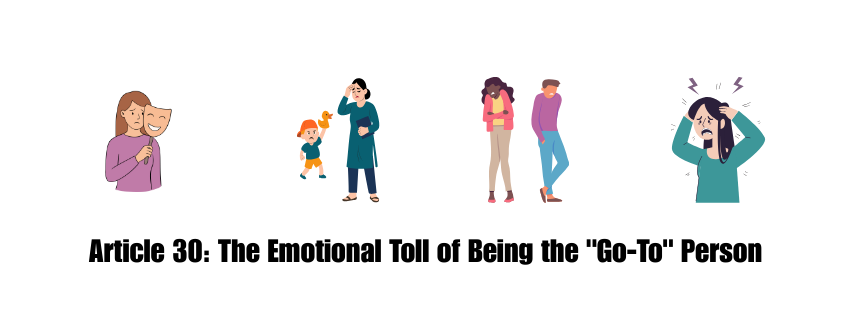
Article 30: The Emotional Toll of Being the "Go-To" Person
Every household has someone who’s the default. The go-to person. The one everyone turns to when something needs doing, when something breaks, when emotions run high, or when someone forgets. For many women, that role becomes more than a responsibility — it becomes an identity. And over time, it takes a toll.

Article 18: Women's Roles as Default Managers at Home
In many heterosexual relationships, women are not just partners — they become the default managers of the home. This role includes not only executing tasks but also anticipating needs, organizing logistics, and emotionally supporting everyone. Being the default manager means carrying the mental blueprint of the household — and it often happens by default, not by choice.

Article 16: The Impact of Early Life Gendered Chores
The division of labor in adulthood doesn’t begin when we move in with a partner — it starts much earlier, in childhood. The chores we’re assigned, the praise we receive, and the behaviors we’re encouraged to adopt all play a role in shaping how we think about responsibility. For many, early gendered chore assignments lay the foundation for the unequal mental load that shows up later in relationships.

Article 14: Media’s Role in Gender Role Perpetuation
Media reinforces outdated gender roles that shape mental load at home. Learn how to recognize these patterns—and how to challenge them for better balance.

Article 13: How Boys and Girls Are Socialized Differently
Explore how early gender socialization impacts adult responsibilities and mental load—and how couples can rewrite outdated roles for true partnership.

Article 12: Cultural Expectations of Women vs. Men
Explore how cultural norms shape gender roles, mental load, and emotional labor — and how couples can rewrite these outdated scripts for real equality.

Article 10: Societal Norms Reinforcing Unequal Load Distribution
Introduction Mental load doesn’t develop in a vacuum — it’s shaped by the society we live in. From media messages to cultural traditions, the world around us constantly reinforces the idea that women should be the primary caretakers and organizers of home life. These societal norms are powerful forces, silently dictating expectations and shaping behavior.