

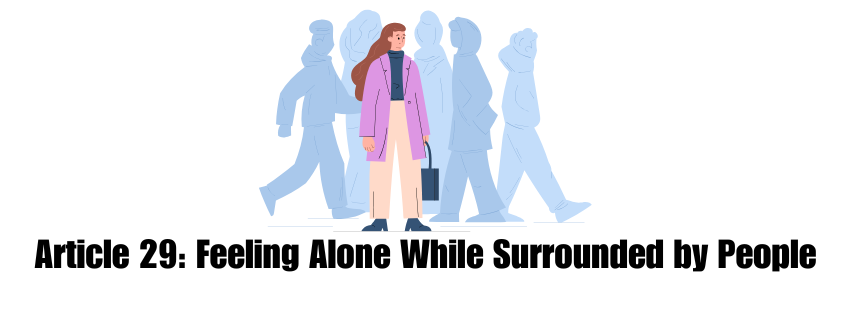
Article 29: Feeling Alone While Surrounded by People
There’s a particular kind of loneliness that doesn’t come from being physically alone — it comes from carrying too much, unnoticed, in the presence of others. This form of emotional isolation is common among those who hold the mental and emotional weight of their households. They’re surrounded by people they love, yet feel invisible in the very systems they maintain.
Introduction There’s a particular kind of loneliness that doesn’t come from being physically alone — it comes from carrying too much, unnoticed, in the presence of others. This form of emotional isolation is common among those who hold the mental and emotional weight of their households. They’re surrounded by people they love, yet feel invisible in the very systems they maintain.
The Loneliness of Being the One Who Remembers When one partner becomes the central processor for all things household, parenting, logistics, and emotional care, they often feel like they exist in a different reality from their partner. They’re holding the to-do list, the social dynamics, the logistics, and the emotional pulse of the home — often in silence.
What they long for isn’t company. It’s recognition.
Signs of Hidden Loneliness
Going through the motions of family life while feeling emotionally detached
Offering support to others without receiving it in return
Feeling emotionally invisible, even while engaging with loved ones
Carrying burdens silently to “keep the peace”
This kind of loneliness can deepen when your partner is nearby but disconnected from your inner world — your thoughts, stress, and emotional fatigue.
Real-Life Illustration Julie sits at dinner with her family. Everyone is talking, laughing, eating. But inside, she feels numb. She’s still thinking about the unread emails from school, the mental list of groceries to buy, the appointment she needs to reschedule. No one else sees it — they assume she’s fine. Greg thanks her for dinner, but doesn’t ask how she is.
She smiles. But what she really wants is for someone to say, “You seem tired — what can I take off your plate?”
Why It’s So Hard to Talk About This kind of loneliness often doesn’t get voiced because:
It’s hard to explain something invisible
It feels like complaining about things that “should be fine”
It’s vulnerable to admit that you feel alone when you’re not physically isolated
But emotional invisibility is real — and when left unspoken, it can grow into resentment and disconnection.
Bridging the Emotional Distance Connection requires more than proximity. To bridge the gap, both partners must:
Ask about the emotional labor behind the day
Express gratitude for the invisible work
Be present — not just physically, but emotionally
Create moments for genuine check-ins, not just functional conversations
For the Partner Who Feels Alone
Write down what you’re carrying and share it
Ask for more than task-sharing — ask for emotional noticing
Create space for your own emotional needs to be named and met
Reflection Prompt Have you ever felt emotionally invisible, even when surrounded by people? What kind of support would help you feel seen?
Conclusion Loneliness doesn’t always mean being alone — sometimes it means being everything for everyone else and nothing for yourself. When emotional labor and invisible work go unrecognized, the person doing them can feel deeply isolated. But that can change. With openness, noticing, and shared presence, connection can be restored — and loneliness can begin to dissolve.

Article 6: Remembering Tasks as Part of Mental Load
Introduction One of the most overlooked yet mentally taxing components of the mental load is remembering. It’s not just about memorizing dates or items on a to-do list. It’s about holding the cognitive responsibility for an entire household’s needs, timelines, and preferences — and doing it around the clock. Remembering, in this context, is not passive. It’s an active and constant task, quietly demanding energy and attention.
Introduction One of the most overlooked yet mentally taxing components of the mental load is remembering. It’s not just about memorizing dates or items on a to-do list. It’s about holding the cognitive responsibility for an entire household’s needs, timelines, and preferences — and doing it around the clock. Remembering, in this context, is not passive. It’s an active and constant task, quietly demanding energy and attention.
What She’s Remembering The scope of remembering stretches across every aspect of family life. It includes:
Doctor appointments for each family member, along with vaccine schedules and insurance paperwork
School events, permission slips, spirit days, and homework deadlines
Birthdays of extended family, friends, teachers, and the planning that follows
Grocery staples, household items running low, and seasonal needs like sunscreen in summer or coats in winter
Who likes what — favorite snacks, bedtime routines, and emotional triggers to avoid
What needs to be done today, tomorrow, this weekend, and even next month
This kind of remembering isn’t just about recalling information. It’s also about acting on that memory at the right time. It’s remembering to remind others — to make sure the lunchbox is packed, the bill is paid, or the teacher gets the email in time. It’s remembering to send thank-you cards, to RSVP, and to check on a sick friend. And it’s all happening in her head.
Mental Load in the Form of Mental Tabs Many women describe the sensation as having dozens of mental tabs open at all times. These tabs aren’t closed until the task is fully completed — and often, new tabs are constantly opening. The moment a task is done, another is waiting. And remembering is the thread that connects them all.
This is where mental fatigue builds. Unlike physical tasks, which have a start and a stop, remembering doesn’t rest. It’s ongoing, recursive, and layered. Even at night, the brain might be ticking through things to do the next day, worrying about what was forgotten, or mentally rehearsing a conversation to prepare for an upcoming task.
The Emotional Weight of Remembering for Others Part of what makes remembering so heavy is that it’s often done on behalf of everyone else. She doesn’t just remember her own schedule — she remembers everyone’s. She anticipates needs that others don’t even know they have yet. That includes:
Prepping the diaper bag before someone even thinks of leaving the house
Recalling when the last oil change was
Noticing when the cleaning supplies are running low, before anyone else notices the mess
Making sure there are snacks when an activity might run into a time when someone could get cranky from hunger
If she forgets, it impacts the whole family. And if she remembers, no one notices — because everything goes smoothly. This creates a no-win scenario where her success is invisible, and her occasional mistakes are highly visible.
Real-Life Illustration A mom, Julie, doesn’t just remember to bring snacks to the soccer game. She remembers that her spouse, Greg, boss’s birthday is next week. She recalls when the dog needs flea medication. She knows which neighbor is allergic to nuts and which child is terrified of balloons. None of this is written down. It’s stored, cross-referenced, and automatically updated — all in her head.
When Greg forgets something, Julie typically catches it before it becomes a problem. But who catches it for Julie? Often, no one. That’s why she feels so overwhelmed — because remembering is not just a skill. It’s a responsibility that weighs heavier the longer it’s carried alone.
What Happens When the Memory Keeper Burns Out When the person who remembers everything starts to burn out, things fall apart. Appointments get missed, meals are skipped, routines break down, and stress levels rise for everyone. Yet, burnout doesn’t usually come from a single event — it builds slowly, over years of silent remembering with little recognition.
Reflection Prompt Think about the last time you were reminded of something important. Who reminded you? Who’s holding the calendar, the checklist, the birthdays, the grocery staples, and the family stories? Ask yourself: Am I sharing the work of remembering, or relying on someone else to do it all?
Conclusion Remembering is one of the most invisible and underestimated aspects of the mental load. But its impact is profound. By becoming more aware of what your partner is holding in her head — and by actively taking responsibility for remembering alongside her — you lighten the load, strengthen the partnership, and create a more balanced, connected life together.