Celeste McClannahan Celeste McClannahan

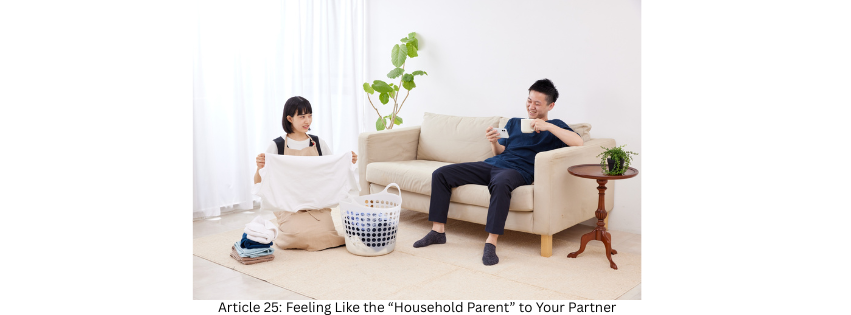
Article 25: Feeling Like the “Household Parent” to Your Partner

In a balanced relationship, both partners act as equals. But when the mental and emotional load becomes one-sided, one partner often slips into a different role — that of the “household parent.” This dynamic can feel like parenting your partner instead of partnering with them. It's not always intentional, but over time, it creates resentment, emotional distance, and burnout.

Introduction In a balanced relationship, both partners act as equals. But when the mental and emotional load becomes one-sided, one partner often slips into a different role — that of the “household parent.” This dynamic can feel like parenting your partner instead of partnering with them. It's not always intentional, but over time, it creates resentment, emotional distance, and burnout.

What It Means to Be the Household Parent Being the “household parent” means being the one who:

  • Remembers appointments and deadlines

  • Plans meals and monitors nutrition

  • Keeps the home running and the calendar updated

  • Tracks everyone’s emotional well-being

  • Checks in to make sure tasks are completed correctly

In essence, it means managing not only the household but your partner’s follow-through, learning curve, and awareness. It feels less like a partnership and more like a supervisory role.

How This Dynamic Develops This role usually emerges gradually. One partner consistently takes initiative, while the other becomes reactive. Instead of sharing responsibility, one plans and the other waits. The more one partner takes on, the less the other has to. It becomes a feedback loop:

  • She manages everything because he doesn't notice

  • He doesn’t notice because she always manages everything

Over time, the managing partner feels exhausted. But asking for help doesn’t solve the problem — because what they really want is shared ownership, not occasional help.

Real-Life Illustration Julie feels like she’s raising three kids — two children and her husband, Greg. She plans meals, manages bedtime, schedules doctor appointments, and tracks school events. Greg helps when she tells him exactly what to do, but rarely takes initiative. When she tries to back off, things fall through the cracks, and she ends up fixing the mess.

She’s not just tired from doing too much. She’s tired from carrying the weight of accountability — for everyone.

The Emotional Cost Being in a parenting role with your partner can lead to:

  • Loss of attraction and intimacy

  • Emotional fatigue from having to lead all the time

  • Feeling like the only adult in the room

  • Resentment from being responsible for everything, including how the other person participates

This imbalance doesn’t just affect logistics — it affects connection. It’s hard to feel emotionally close to someone when you feel like you’re constantly managing them.

Why Partners Fall Into the Child Role The partner being parented isn’t usually lazy or uncaring — they may simply be following a script they grew up with. If they were never expected to take initiative in emotional or domestic labor, they may not realize what’s missing. Or they may lack confidence and fear doing it “wrong,” so they defer.

Breaking the Pattern To move from parenting to partnering, both people need to:

  • Name the dynamic honestly, without shame or blame

  • Reflect on how their own habits reinforce the pattern

  • Recommit to shared ownership, not just divided chores

  • Agree on areas where each will take full responsibility — no reminders needed

Steps Toward True Partnership

  • Rotate who plans meals, manages appointments, or runs bedtime routines

  • Use shared tools (like calendars and lists) so both partners are equally informed

  • Set check-in times to talk about what’s working and what’s not

  • Rebalance based on bandwidth and capacity, not outdated roles

Reflection Prompt In what ways have you acted as the “parent” in your relationship? What would it take to move from managing to partnering?

Conclusion No one wants to parent their partner — and no one wants to feel parented. A true partnership is built on shared awareness, shared effort, and shared responsibility. When both people step up as equals, the relationship becomes lighter, deeper, and more connected.

Read More