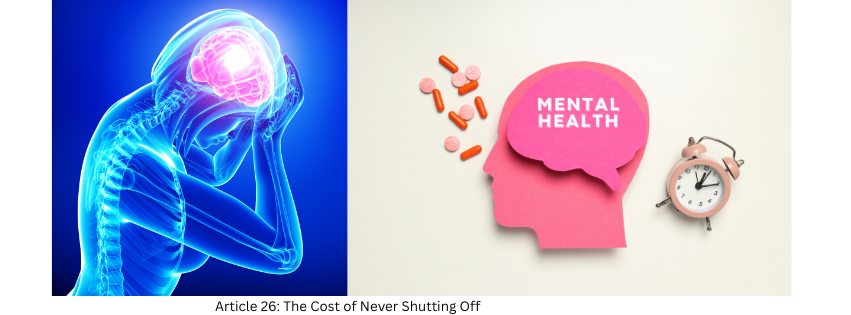
Article 26: The Cost of Never Shutting Off
One of the most exhausting parts of carrying the mental load is that it never ends. It’s not a task you complete — it’s a constant, low-level hum in the background of your life. This inability to mentally or emotionally shut off has a steep cost: burnout, resentment, and a deep longing for rest that rarely comes. For many women, the mental switch never flips to "off." And over time, that chronic alertness becomes unsustainable.
Introduction One of the most exhausting parts of carrying the mental load is that it never ends. It’s not a task you complete — it’s a constant, low-level hum in the background of your life. This inability to mentally or emotionally shut off has a steep cost: burnout, resentment, and a deep longing for rest that rarely comes. For many women, the mental switch never flips to "off." And over time, that chronic alertness becomes unsustainable.
The Problem Isn’t Just Busyness — It’s Hyper-Vigilance Mental load isn’t just about having a lot to do. It’s about constantly thinking about what needs to be done, who needs what, and what might go wrong. It’s about:
Remembering tomorrow’s school event while making dinner
Replaying a tense conversation while folding laundry
Creating a grocery list while helping with homework
Anticipating your partner’s emotional state before they walk in the door
It’s not just multitasking — it’s multi-thinking. And there’s no off button.
Why It’s Hard to Disconnect Many women have been conditioned to believe that their value comes from being useful, organized, prepared, and emotionally available. Rest feels irresponsible. Letting go feels dangerous. And asking someone else to take over feels like more work than doing it yourself.
This mindset keeps the mental gears turning — even during downtime. She may sit down to relax, only to remember something she forgot. She may lie in bed reviewing the next day’s to-do list. Even sleep isn’t always restful.
Real-Life Illustration Julie is watching a movie with her family, but she’s not fully present. She’s thinking about the birthday party next weekend, wondering if she RSVP’d, trying to remember if they have wrapping paper, and debating whether the dog has had her flea meds.
She’s physically still — but mentally, she’s spinning. Greg laughs at a joke in the movie and looks over at Julie, who smiles faintly. She wishes she could relax like that — but her brain won’t stop.
The Cost of Chronic Mental Engagement Never shutting off leads to:
Difficulty enjoying leisure time
Trouble falling asleep or staying asleep
Heightened anxiety or irritability
Feelings of isolation or emotional numbness
A sense that even rest requires effort
Eventually, this constant mental engagement creates burnout. Not the kind that comes from overwork alone — but the kind that comes from never being able to fully rest your mind.
What Rest Really Means Rest is not just physical. True rest means:
Trusting someone else to carry the details
Letting go of the need to monitor everything
Feeling safe enough to be off-duty
Releasing the sense that your worth is tied to productivity
For many women, this kind of rest feels inaccessible — not because they don’t need it, but because no one else has stepped in to share the invisible responsibilities.
How to Create Mental Space Reclaiming the ability to shut off begins with small but powerful shifts:
Name what’s keeping your mind on high alert
Practice transferring full responsibility for a task to your partner
Establish boundaries around your availability and task ownership
Prioritize rest as a need, not a luxury
And for partners:
Ask what you can take on — completely, without reminders
Check in not just about what needs to be done, but about what’s weighing on her mind
Offer rest as a gift: “I’ve got it — go rest. For real.”
Reflection Prompt When was the last time you felt mentally off-duty — not just resting your body, but resting your brain? What would help you experience that more often?
Conclusion The cost of never shutting off is more than exhaustion — it’s the loss of peace, presence, and joy. But it doesn’t have to be this way. When couples begin to see and share the mental load, they make space for real rest — and for a fuller, more connected life.